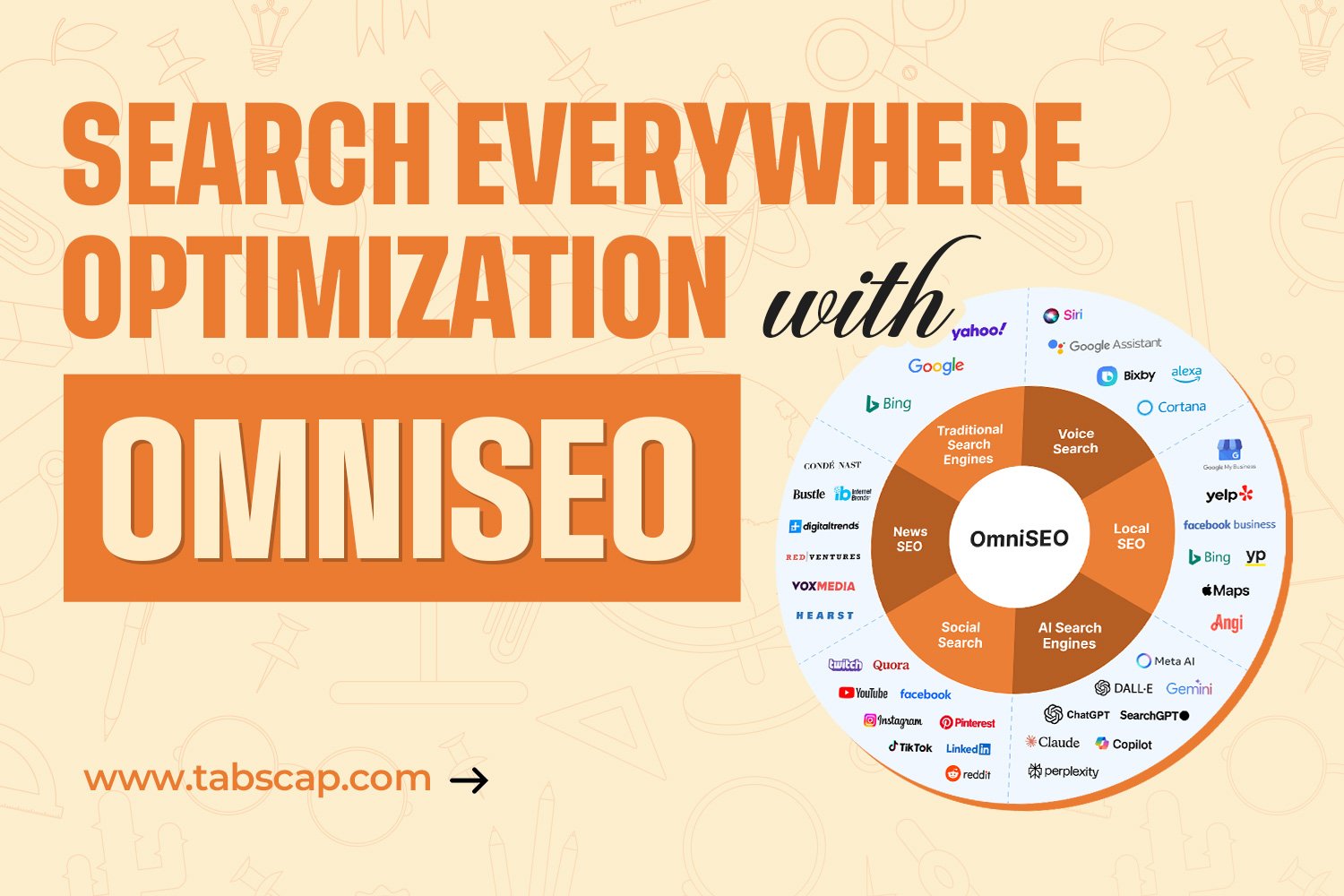
Search results are undergoing its most disruptive shift since the invention of the search engine itself. Traditional blue links are rapidly sharing space with and often yielding to generative summaries, conversational agents, and interactive product comparison tables.
E-commerce brands can no longer rely solely on legacy SEO models. To survive and thrive today, you must master generative AI search optimization to successfully rank products in AI search ecosystems like Google Search Generative Experience (SGE), Bing Copilot, ChatGPT, Gemini, and Perplexity.
This transformation demands a blend of Generative Engine Optimization (GEO) and Answer Engine Optimization (AEO). If your catalog isn't visible in these AI-synthesized responses, your brand simply doesn't exist for a massive segment of modern buyers.
From Keywords to Vector Semantic
Traditional search engines index pages based on keyword density, backlinks, and technical optimization. Generative engines, however, process queries using Large Language Models (LLMs) and Vector Search. They understand user intent, context, and semantic relationships.
To adapt, brands must transition from simple keyword targeting to multi-dimensional data feeding. When you formulate a strategy for generative AI search optimization, you are optimizing your data so LLMs can easily retrieve, trust, and synthesize it.
If you want to rank products in AI search results, your product attributes must align perfectly with conversational queries.
Deep Schema Markup
LLMs rely on structured data to verify facts. Without structured schema, generative search engines might hallucinate your pricing, misinterpret your product features, or ignore your inventory status entirely.
Implementing comprehensive JSON-LD product schema is the absolute baseline of generative AI search optimization. Your schema must go beyond basic titles and prices. It should include:
- High-resolution image arrays
- Explicit SKU and MPN numbers
- Highly specific product attributes (material, color, dimensions, weight)
- Aggregated rating scores and review counts
- Up-to-the-minute stock availability and precise shipping details
When you structure this data meticulously, you make it incredibly easy for algorithmic crawlers to parse and display your items. Utilizing the ultimate on-page SEO checklist can help you align your standard optimizations with these advanced structural demands.
Structured data is the primary bridge that allows you to rank products in AI search when users ask for specific, highly filtered recommendations.
Elevate Product Descriptions for Conversational Synthesis
Generative engines do not copy-paste your product descriptions. They summarize them to answer direct user queries. If your copy is thin, generic, or overly promotional, the AI will ignore it.
To achieve superior generative AI search optimization, your product copy must answer real-world questions. Focus on:
The Problem-Solution Framework: Explain exactly what pain point the product resolves.
Highly Specific Use Cases: Instead of writing "durable running shoes," write "lightweight trail running shoes designed for wet clay and steep gravel descents."
Comparison-Ready Language: Use clear, comparative metrics (e.g., "lasts 40% longer than standard lithium batteries") so the LLM can extract this data for comparison tables.
Traditional Product Copy
"This is a premium ergonomic office chair with adjustable armrests and a mesh back."
AI-Optimized Product Copy (GEO-Ready)
"Ergonomic mesh office chair engineered to reduce lower back pain during 8+ hour work sessions. Features 3D adjustable armrests, lumbar support dials, and breathable woven mesh that keeps users cool. Ideal for remote software developers and gamers seeking posture correction."
By enhancing your copy with these descriptive details, you implement effective SEO content optimization that ensures your text matches natural language queries. This precision directly helps you rank products in AI search because the conversational agent can confidently recommend your product for specific micro-needs.
Semantic Search and Long-Tail Questions
Generative searches are highly conversational. Instead of searching "best coffee maker," users now ask, "What is the quietest espresso machine under $300 that can fit on a narrow kitchen counter and has a milk frother?"
To capture these high-intent queries:
- Build out dedicated FAQ sections on every product page.
- Optimize for natural speech patterns, mirroring the rise of voice search to capture conversational inputs.
- Cover the top on-page product SEO elements by writing comprehensive, informational content that answers who, what, why, and how.
Ensuring your site does not suffer from low-value pages is critical. Always work to avoid thin content penalties by maintaining authoritative, descriptive, and unique copy across your entire inventory.
This depth is non-negotiable if your goal is generative AI search optimization. When your content is semantically rich, the system will naturally select your listings to rank products in AI search carousels.
Brand Mentions, Digital PR, and Retrieval-Augmented Generation
AI search engines don't just look at your website. They use Retrieval-Augmented Generation (RAG) to query the broader web, verifying your product's quality across third-party blogs, forum discussions (like Reddit and Quora), press releases, and editorial reviews.
If an LLM synthesizes a response for "best budget mechanical keyboards," it looks for consensus across multiple sources. To improve your overall generative AI search optimization footprint, you must execute a robust digital PR strategy:
- Secure product placements on authoritative, niche-relevant publications.
- Encourage discussions and honest feedback on public forums.
- Develop high-quality comparisons and roundups where your product is evaluated.
This off-page authority signals to the AI that your brand is a trusted market player. It is a critical component if you want to rank products in AI search results consistently across different LLM platforms.
Accumulate High-Quality, Context-Rich User Reviews
Customer feedback is a core data stream for generative AI engines. LLMs analyze sentiment to determine if your product lives up to its marketing claims. They crawl user reviews to extract specific pros and cons.
If multiple customer reviews mention that a winter jacket is "incredibly warm but runs one size too small," the AI engine will summarize this exact sentiment in its final search recommendation.
Understand why reviews matter for search visibility to leverage this goldmine of user-generated content. Actively prompt your buyers to leave detailed, specific reviews rather than simple "great product" comments.
Ask them to mention the exact use cases, durability, and features. Having a steady flow of rich user-generated data strengthens your generative AI search optimization efforts, making it highly probable that the engine will rank products in AI search queries looking for highly rated, verified items.
Speed, Crawlability, and Renderability
If search engine bots cannot crawl your JavaScript-heavy pages quickly, they cannot feed your product data to their underlying models. Technical performance remains the backbone of any organic strategy.
Ensure your site is built on a rock-solid infrastructure. If you are launching an e-commerce venture, learning how to open a Shopify store or choosing a technical framework that supports native, rapid rendering is vital.
Double-down on these technical SEO essentials to keep your crawl budget optimized and your loading speeds instant:
- Optimize image formats (WebP/AVIF) and implement lazy loading.
- Use Server-Side Rendering (SSR) to ensure your product specifications are immediately visible in the raw HTML.
- Clean up redirect loops, broken links, and duplicate canonicals.
A fast, highly indexable website is a prerequisite for generative AI search optimization. If the search engine’s AI crawler times out trying to render your page, it cannot process your inventory, leaving you completely unable to rank products in AI search modules.
Role of AI and Next-Gen Marketing Tools
Understanding the broader applications of AI in digital marketing will give you a major competitive advantage. You should use AI-driven auditing tools to test how different LLMs perceive your brand.
Analyze your product listings by prompting Gemini or ChatGPT directly: "What are the pros and cons of [Your Product Name] based on web consensus, and how does it compare to [Competitor Name]?"
The answers will reveal critical gaps in your digital footprint, pointing out exactly where you need to refine your positioning to improve your generative AI search optimization and further rank products in AI search layouts.
Checklist for E-Commerce Brands
To dominate generative search results, implement this immediate checklist:
- Deploy Schema: Run a rich-results test to confirm error-free Product and Offer schema.
- Optimize for AEO: Add structured Q&A sections directly onto your product pages.
- Refine Copy: Rewrite product descriptions to be highly descriptive, avoiding generic hype.
- Boost Digital PR: Reach out to publishers to secure mentions in niche roundups.
- Audit Speed: Keep mobile page load times under 1.5 seconds.
- Analyze Competitors: Use conversational prompts to see who the AI currently recommends in your niche.
Conclusion
The transition to generative engine discovery is not a temporary trend; it is the permanent evolution of how consumers interact with information. By proactively adopting generative AI search optimization strategies, you position your inventory directly in front of highly qualified buyers who use conversational queries to make purchase decisions.
To consistently rank products in AI search results, prioritize deep technical structured data, conversational semantic copywriting, positive third-party sentiment, and flawless site performance. By taking these actions today, you secure your brand's digital real estate in the highly lucrative generative search feeds of tomorrow.
Want your products to appear inside AI-generated recommendations, comparison tables, and conversational search results? Tabscap helps e-commerce brands optimize for ChatGPT, Gemini, Perplexity, and Google AI Search with future-ready GEO and AEO strategies that drive visibility where buyers are actually searching.
Related Blogs